Kyoto Morning Strategy 2026: How to Beat 40M Tourists to Every Temple
2026-07-07· Updated 2026-09-11 · 4 Min. Lesezeit

Kyoto's 40M annual tourists ruin every temple photo 10 AM-4 PM. Here's the 2026 morning-only strategy: wake at 5:30 AM, own the temples empty.
Kyoto had 40 million tourists in 2025. Every famous temple looks like Tokyo rush hour 10 AM-4 PM. The only solution: wake up at 5:30 AM and own the city empty.
💡Last content review: September 2026
Prices, dates, and opening hours compiled from official operator websites and Japanese-language public sources.
⚡🏯 Kyoto books up all year
Kyoto is busy in every season, and the best-located rooms go first. Don't leave it until the last minute: book as soon as your dates are firm.
The perfect early-morning schedule
| Time | Location | Why | Crowd level |
|---|---|---|---|
| 5:30 AM wake | Hotel | Coffee at 7-Eleven, warm up | Empty |
| 6:00 AM | Fushimi Inari Shrine | 1000 torii gates, sunrise light | 0-5 people |
| 7:30 AM | Coffee + light breakfast | Konbini onigiri + kick coffee | - |
| 8:00 AM | Kinkakuji (Golden Pavilion) | Opens 9 AM, be first in line | Empty until 9:30 |
| 9:30 AM | Ryoanji rock garden | Adjacent to Kinkakuji | Manageable |
| 11:00 AM | Nishiki Market lunch | Before 1 PM tourist wave | Manageable |
| 1:00 PM | REST at hotel or cafe | Escape 1-5 PM peak | - |
| 4:00 PM | Arashiyama Bamboo Grove | Golden hour, tourists leaving | Emptying |
| 6:00 PM | Kiyomizudera Temple + illumination | Different vibe at night | Manageable |
🎯The rule
For each site: arrive 15-30 min BEFORE it opens. Fushimi Inari is 24/7 free — hit at 5:30-7 AM for 100% empty gates. Kinkakuji, Ginkakuji, Ryoanji all open 8-9 AM — arrive at opening.
Specific morning-tactics per major site
- ●Fushimi Inari: no entry gate, no ticket. Walk 30 min up for zero-people torii shots. Full loop (2 hr) at 6 AM for lightening skies.
- ●Kinkakuji (Golden Pavilion): opens 9 AM. Arrive 8:45, be in first 20 through gate. Golden hour reflection until 10 AM.
- ●Ginkakuji (Silver Pavilion): opens 8:30 AM. Same strategy.
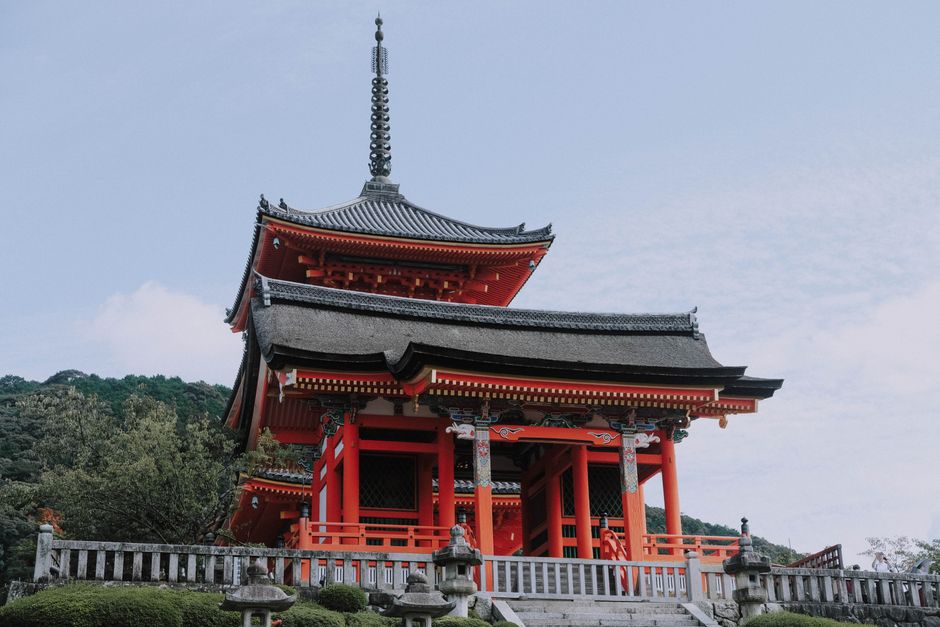
- ●Kiyomizudera: opens 6 AM! Zero people until 8 AM. Or come at 6 PM for illumination.
- ●Arashiyama Bamboo Grove: no gate, no ticket, 24/7. Best 6-8 AM or 4-6 PM (crowds gone).
- ●Ryoanji rock garden: opens 8 AM. Meditative empty morning until 10 AM.
- ●Gion (geisha district): 5-6 PM to spot real geiko/maiko walking to appointments (avoid the crowds at 7-9 PM)
Where to stay for early-morning success
- ●Near [Kyoto](https://www.booking.com/searchresults.html?ss=Kyoto&aid=8095781&label=auto-kyoto-autolink&nflt=review_score%3D80&order=popularity) Station — best for early Fushimi Inari access (5 min train)
- ●Near Gion/Higashiyama — Kiyomizudera walking distance
- ●Near Arashiyama — walking distance to bamboo grove + monkey park
- ●Downtown Karasuma/Shijo — central to all sites, breakfast options
Book central Kyoto hotels
- ✓ Free cancellation on most rooms
- ✓ Compare 28M+ properties
- ✓ No booking fees
⏰ Lock in before prices rise — this week's rates may not hold
3 Kyoto hotels for central Higashiyama + temple access
⏰ Kyoto rooms sell out 4-6 months ahead for sakura (late March) and koyo (late November)
1. Hyatt Regency Kyoto
Higashiyama's best 5-star location. 5-min walk to Sanjusangendo, 15-min to Kiyomizu. Quiet modern garden-view rooms.
Book on Booking →2. The Thousand Kyoto
Kyoto Station direct access — easiest base for 6 AM shinkansen to any corner of Kyoto. Modern 5-star finish.
Book on Agoda →3. Mitsui Garden Hotel Kyoto Shinmachi Bettei
Mid-budget pick in central Shinmachi — walkable to Nishiki Market + bus to Tofuku-ji. Reliable value.
Book on Trip.com →Prices shown on each site. We earn a small commission if you book — at no cost to you.
The 'anti-tourist' hidden temple day
For a totally uncrowded Kyoto day: visit temples 90% of tourists skip. Enkoji, Manshuin, Shisendo (all Ichijoji area, quiet forest temples), or Sanzenin/Jakkoin in Ohara (60 min from central Kyoto). These have <10% of Kinkakuji's crowds but same beauty.
- ●Enkoji Temple: 200 tourists/day (vs Kinkakuji's 10,000+)
- ●Manshuin: hidden gem, incredible autumn foliage
- ●Shisendo: retired poet's garden, meditative
- ●Sanzenin (Ohara): 60 min by bus, moss garden temple
- ●Jakkoin (Ohara): same area, quiet historic temple
Why afternoon Kyoto sucks
12-4 PM: Every temple is 20-40 min wait to enter, then shoulder-to-shoulder inside. Photo attempts get 15 strangers in every frame. Bus/taxi lines 30+ min. Restaurants 45+ min waits. Escape to your hotel to nap, then re-emerge for late afternoon golden hour.
Frequently asked questions
What is a reasonable budget
A full-service meal at a popular ramen shop costs ¥900–¥1,500; a casual sushi lunch runs ¥1,500–¥3,000; mid-range dinner at an izakaya averages ¥3,000–¥5,000 per person including drinks. Michelin-listed sushi or kaiseki in Tokyo and Kyoto can start from ¥15,000 at lunch and climb past ¥30,000 for dinner tasting menus. Convenience-store meals (¥400–¥700) and standing-bar yakitori (¥2,000–¥3,000) stretch budgets without sacrificing quality.
Are reservations required
High-end restaurants, especially Michelin-rated and chef-forward counter spots, typically require reservations 2–4 weeks in advance; the most sought-after sushi counters book months out. Casual ramen, curry, and standing bars generally do not take reservations and operate on walk-in queues of 15–45 minutes at peak hours. Platforms like Tabelog, Pocket Concierge, and TableCheck handle most online bookings; some venues still require a Japanese-speaking caller or hotel concierge intermediary.
Are English menus available
In central Tokyo, Kyoto, and Osaka, roughly 70% of tourist-area restaurants now offer English menus, picture menus, or tablet-based ordering with English support. Smaller cities and residential neighbourhoods are more variable — Google Translate camera mode handles about 90% of printed menus adequately. Allergies and dietary restrictions are harder to communicate reliably; a printed restriction card in Japanese is strongly recommended for anyone with serious allergies.
What is the best time of day to go
Lunch sets (teishoku) offer the best value, typically running 30–50% less than the same restaurant's dinner menu while serving nearly identical dishes. Peak dinner service (7–9 PM) carries the longest queues; an earlier 5:30 PM arrival or late 9 PM sitting at izakaya skips the worst waits. Breakfasts in Japan are hotel-dominated — most independent restaurants only open from 11 AM, with a few notable coffee shop and bakery exceptions.
Are dietary restrictions handled well
Japan's food scene is improving on dietary accommodation but is still less mature than Western cities. Vegetarian and vegan travellers can rely on dedicated apps (HappyCow), shojin-ryori temple restaurants, and a growing list of vegan ramen shops, but should expect fewer options in traditional sushi, izakaya, and ramen contexts. Dashi (fish stock) hides in many "vegetable" dishes. Severe allergies warrant a bilingual allergy card; many restaurants will adapt dishes when asked clearly in advance.
→ Day trips (escape afternoon Kyoto)→ Kyoto autumn foliage (same strategy)Kyoto Gion geisha-district guideWhere to stay in Kyoto→ Low-crowd alternative: Otsu Matsuri→ Oct 22 anomaly: Jidai Matsuri crowdsCompare live hotel rates
- ✓ Free cancellation on most rooms
- ✓ Compare 28M+ properties
- ✓ No booking fees
⏰ Lock in before prices rise — this week's rates may not hold
Check Agoda — often cheaper for Kyoto
- ✓ APAC #1 — cheapest for Korea/Taiwan guests
- ✓ Instant mobile confirmation
- ✓ No prepayment on many rooms
⏰ Peak-season rates climb daily — snapshot today's price now
Japan eSIM — set it up before you fly
- ✓ Works instantly on arrival
- ✓ No SIM card swap
- ✓ Buy before you fly
⏰ Activate the moment you land — no more hunting for free airport Wi-Fi
Japan travel insurance — get covered before you fly
- ✓ Covers Japan medical + evacuation
- ✓ From $45/month flexible
- ✓ Cancel anytime
⏰ Japan doesn't accept most foreign health cards — one ER visit = your whole trip budget
JR Pass — see if it pays off before you book
- ✓ 7, 14, 21-day pass options
- ✓ Activate within 1 year
- ✓ Free shipping worldwide
⏰ Must be bought BEFORE arrival — tourists only
Tours and tickets — check dates before they sell out
- ✓ Skip-the-line e-tickets
- ✓ Mobile voucher, no printing
- ✓ Free cancellation up to 24h
⏰ Mobile voucher instantly — skip the ticket line on arrival
🛠️ Free travel tools
Interactive tools built by us — no signup, no ads.
🎯 For readers of this guide
Ready to book your stay?
Live prices for Kyoto — free cancellation on most rooms.
- ✓ Free cancellation
- ✓ Best price guarantee
- ✓ No booking fees
Affiliate link — no extra cost to you
📚 Related guides
Where to Stay in Kyoto: Best Neighborhoods (2026)
Kyoto's best base areas compared — for temple access, atmosphere and value.

Japan Ramen Guide 2026: 8 Regional Styles + Where to Eat Each
Japan's ramen scene has 8 distinct regional styles — Sapporo miso, Hakata tonkotsu, Tokyo shoyu, and more. Complete guide with where to eat each.

USA to Japan 2026: Complete First-Timer's Guide (Flights, Visa, Budget, Culture)
Everything an American needs for their first Japan trip in 2026. Flights from JFK/LAX/SFO/ORD, no-visa 90-day stays, USD budget with real numbers, jet lag, IC card, ATM strategy, cultural gotchas.

Kyoto Autumn Foliage 2026: 12 Best Spots + Timing Strategy
Kyoto's autumn foliage runs Nov 15 to Dec 10 in 2026 — the temples and gardens hit peak in a tight 2-week window. Here's the 12-spot ranked list, night illuminations, and the crowd-avoidance strategy.
💬War das hilfreich? Teilen Sie es
📮Rückmeldung?
Fehler entdeckt, etwas fehlt oder ein Vorschlag? Wir lesen jede Nachricht.
Feedback senden →